From Gorno-Badakhshan to Italy: the story of Tajik white stone and a Chinese entrepreneur
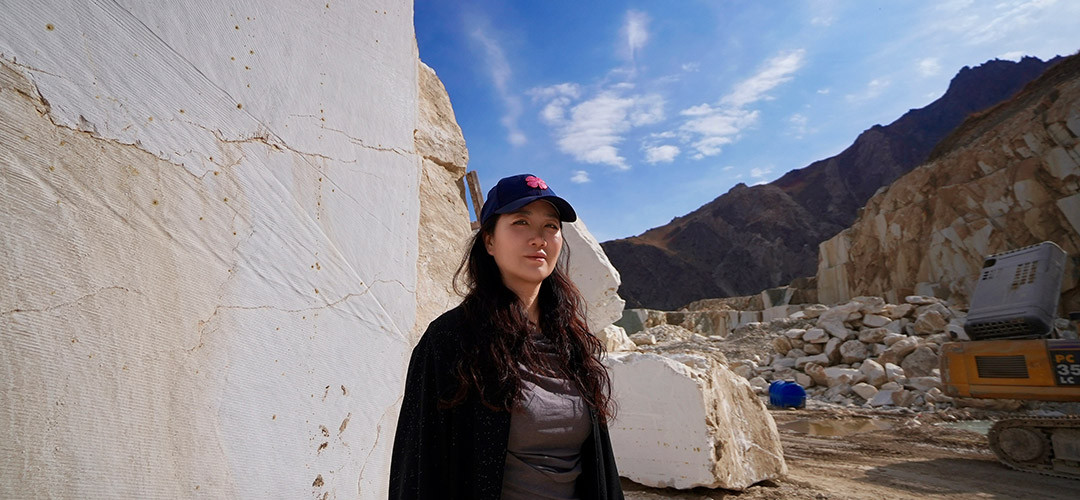
White stone from the high-altitude Poyi Mazor deposit in Vanj district of the Gorno BAdakhshan Autonomous Region (GBAO) is being presented in Italy for the first time at the international Marmomac exhibition. What only a few years ago was known mainly to specialists and designers in China is today making its debut at one of the world’s leading platforms for the natural stone industry.
And behind this event stands not only Tajikistan’s unique resource, but also the people who believed in its potential and managed to take it far beyond the country’s borders.
Sometimes a long journey begins with a single stone
And behind this event stands not only Tajikistan’s unique resource, but also the people who believed in its potential and managed to take it far beyond the country’s borders.
Sometimes a long journey begins with a single stone
In Tajikistan’s case — with a white stone high in the Pamir mountains, amid a harsh climate, snow and virtually inaccessible deposits.
Today this material is being presented in Italy for the first time at Marmomac — one of the most renowned and authoritative international exhibitions of natural stone. It is the most important exhibition for the entire stone production chain. Here visitors can see finished products, equipment, tools and technologies used in the extraction and processing of natural stone. From 22 to 25 September, the exhibition in Verona will mark its 60th anniversary in the natural stone sector.
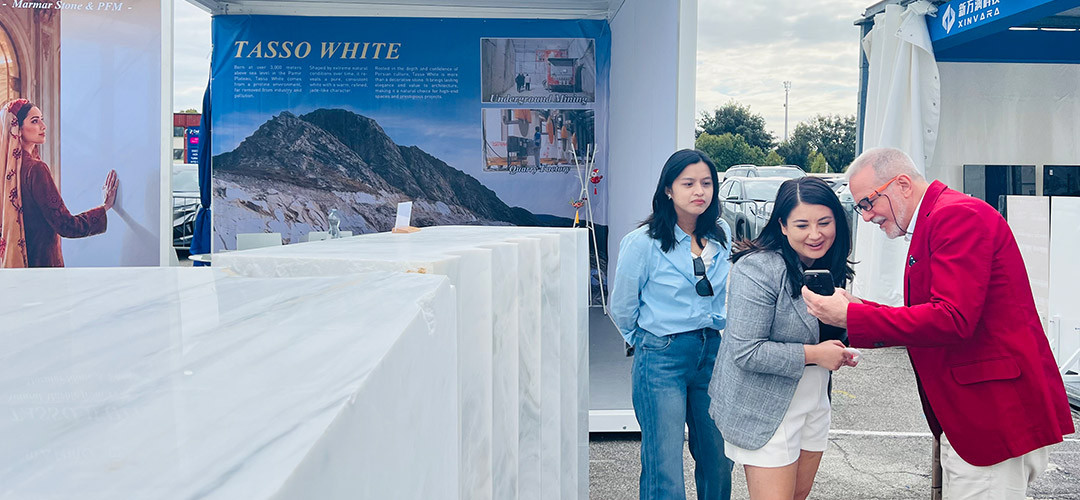
For Tajikistan, this event carries special significance. As an international platform, the product is seen by professionals from across the global industry — architects, designers, manufacturers, processors and companies working with natural stone worldwide.
And most importantly — Tajikistan genuinely has something to show. Poymazar marble, for instance, cannot be assessed merely as a building material.
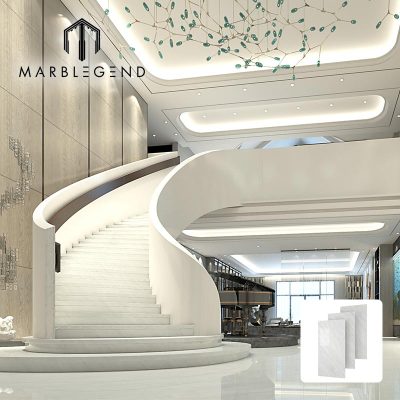
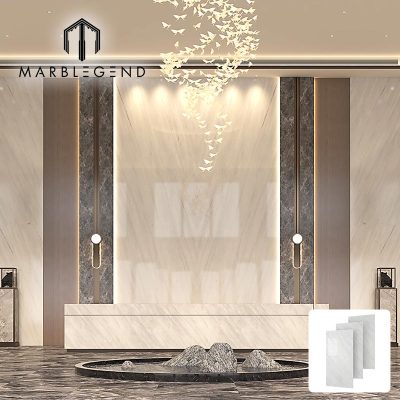
Its principal advantage lies in its light, almost luminous surface: a soft natural pattern and fine white veins create an effect of fluidity. Its texture is compared to jade — a dense, noble and visually luxurious material. But behind the beauty lie serious technical characteristics as well.
The water absorption of the white stone is just 0.11%. It has high resistance to abrasion, along with density and strength, which allow it to be used not only as a decorative element but also in complex architectural and interior projects. It is precisely the combination of aesthetics and physical properties that makes this stone particularly attractive for the premium segment.
This is a case where a natural material from Tajikistan is capable of competing not only on price or origin. It can compete on quality, appearance and character.
From Poymazar to design projects
The white stone of Poymazar was discovered around eight years ago. But the journey from the discovery of the deposit to entering the international market proved to be far from straightforward.
Poymazar is situated high in the mountains. In winter, the deposit becomes virtually inaccessible. Snow arrives as early as December, and full-scale operations can only resume at the end of April or in May. In practice, conventional extraction is possible for only around six months of the year.
The altitude, climate, complex logistics and terrain features long constrained the pace of development. But this is precisely where another part of the story begins — the entrepreneurial one.
Chen Yanli, owner of the Chinese company PFM Co., Ltd, began working in Tajikistan through her involvement in one of a local company’s construction projects. At the time, her team was handling façade work on the project.
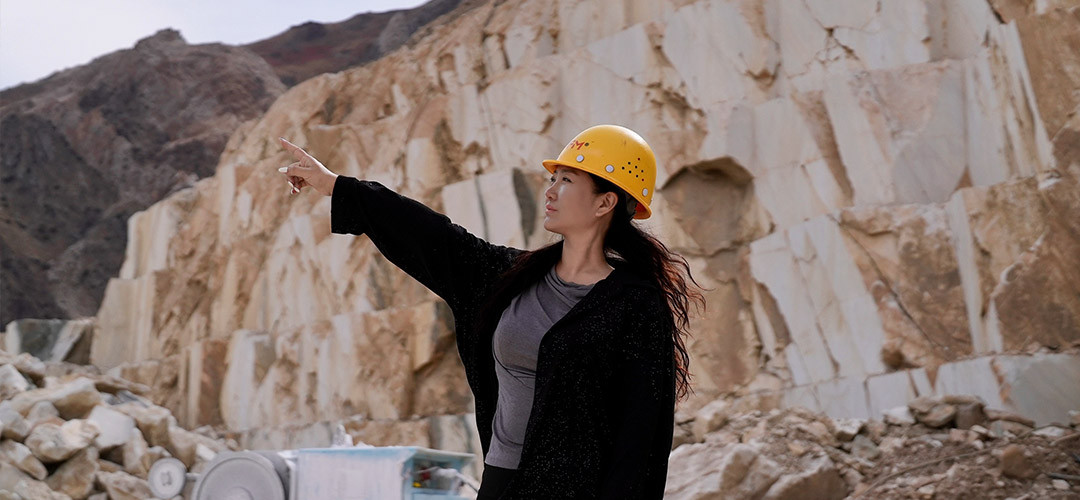
Following that collaboration, PFM was increasingly brought in for other construction projects in the country, including work on residential buildings. Participation in several projects involving marble gradually led Chen Yanli to the idea of developing this area at the level of raw material extraction. According to her, one of the key factors was the high cost of marble. The company therefore began exploring the possibility of developing local deposits.
In 2017, PFM began working with one of the limestone quarries, and in 2019 started studying white marble and the prospects for its extraction. From 2023, the company began supplying white marble from Tajikistan to the Chinese market.
The stone became more than just a raw material
Chen Yanli saw in it an international product — a material that could appeal to architects, designers and developers far beyond Central Asia.
The joint work of Chinese company PFM and Tajik company MARMAR STONE gradually transformed the deposit from a challenging high-altitude site into a project with international prospects: extraction, technology, logistics, processing, market development, presenting the material to designers and the continuous development of the product itself.
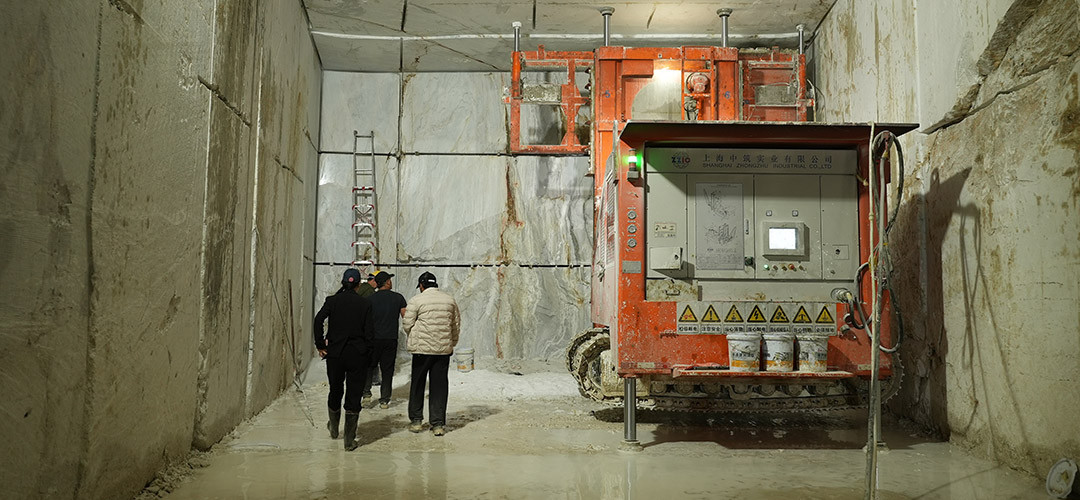
In 2026, a new phase began — tunnel extraction. This technology makes it possible to extract significantly larger stone blocks, thereby expanding the possibilities for their use in large architectural spaces.
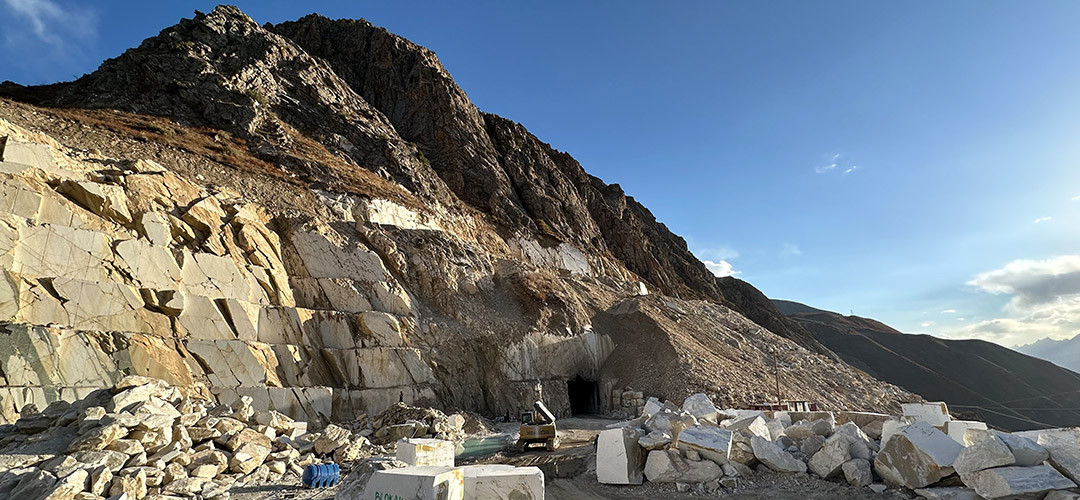
For premium natural stone, block size is of fundamental importance. The larger the format, the more effectively the material’s natural pattern can be showcased — in hotel lobbies, private villas, residential complexes, large wall panels, entrance halls and other prestigious interiors.
Before Italy, the material already had an international history. It entered the Chinese market in 2023. Over three years, the Tajik white stone gained recognition among designers and began to be used in hotel projects, premium apartments, residential complexes and private villas. In other words, it passed a practical market test. Designers saw it, chose it for real projects and began using it in spaces where the quality and appearance of materials are held to particularly high standards.
And it was precisely the interest of the Chinese design community that became one of the arguments for the next step: if the stone had already proved its appeal in China — why not show it to Europe?
And now it is presented at Marmomac
Italy is one of the countries associated worldwide with a culture of marble, architecture and working with natural stone. Here, natural stone is not merely a building material but part of a centuries-old culture.
And it is here that stone from Tajikistan has arrived for the first time. At the exhibition, visitors can see the very material that was recently being extracted high in the Pamirs. Now it stands among stones from countries long known to the global industry.
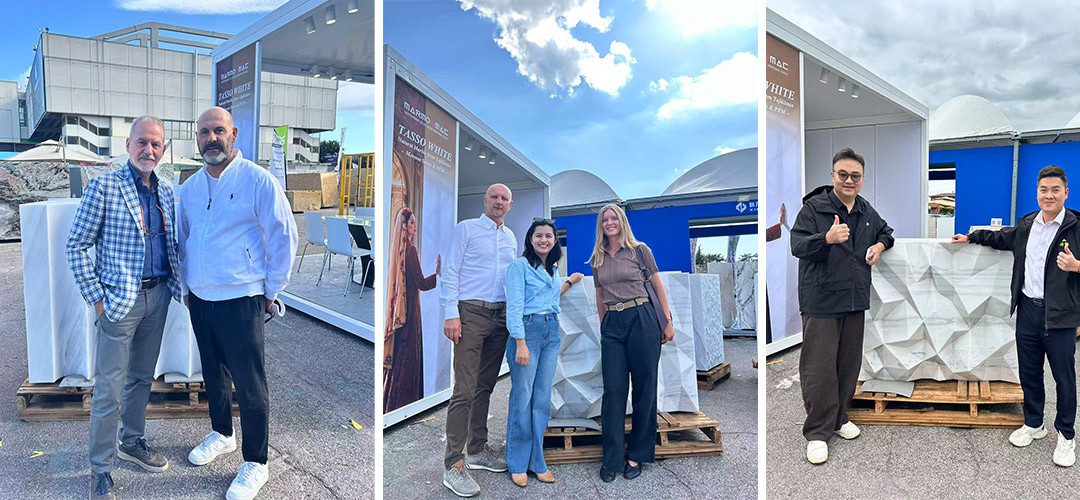
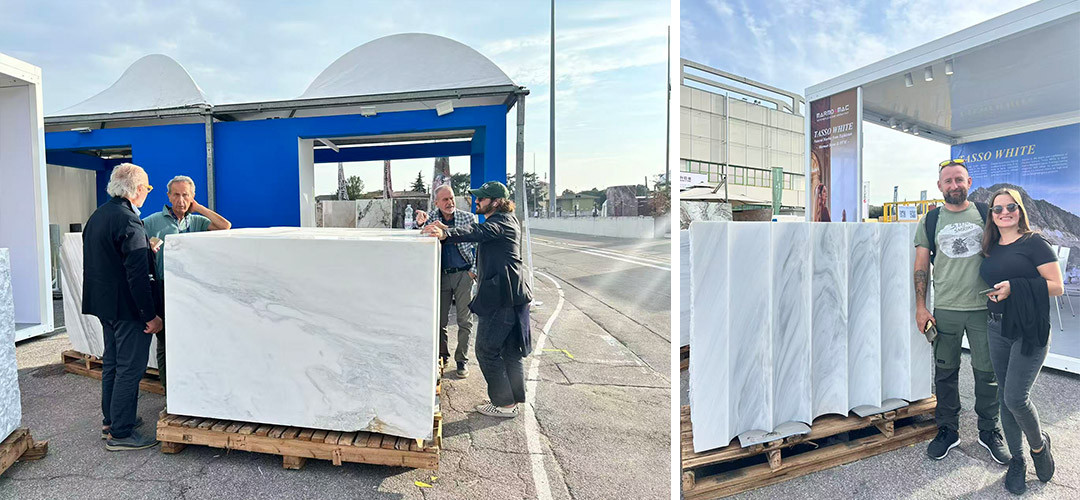
For MARMAR STONE and PFM, this is an important international milestone. And for Tajikistan — an opportunity to present itself from an entirely different angle. Not only as a country of high mountains, but as a country whose mountains contain truly valuable natural materials.
Around 93% of Tajikistan’s territory is covered by mountains. If in the past this figure was most often cited in discussions of geography or tourism, today it is acquiring a different meaning as well. In recent years, new natural stone deposits capable of attracting international market interest have been discovered and developed in the country. And the white stone of Poymazar may prove to be one of the most striking examples of this potential.
Today, Marmar Stone and PFM are working to develop a fully-fledged international product. This covers extraction technology, block quality, processing, design, presentation and promotion. The companies are constantly looking for new ways to showcase the material so that its natural structure is revealed to maximum effect.
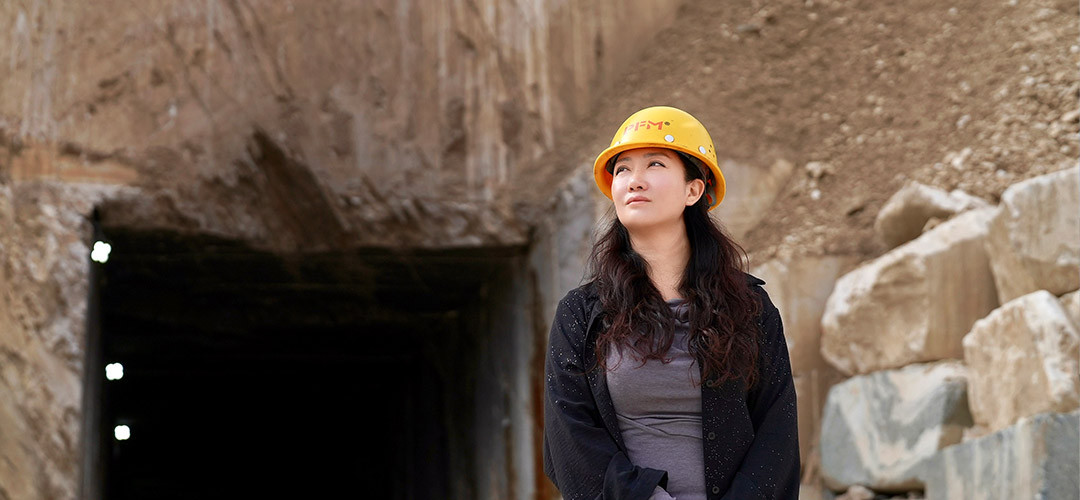
Perhaps the main outcome of this story is not even that one Tajik stone appeared at an international exhibition. Far more important is that the world is becoming acquainted with Tajikistan’s natural stone, and other deposits, other colours, other textures and new projects may follow the marble from Poymazor.
Our marble has been seen by Italy today. And that means it is now beginning an entirely new story — one in which, on the global market, alongside the well-known names of deposits from Italy, Turkey, China and other countries, another origin may gradually appear: Tajikistan
Source: This article is based on a report published by Asia-Plus on September 25, 2026.